
The world of emerging technologies is a driving force behind today's quickly changing digital environment, pushing us towards breakthrough discoveries and revolutionary breakthroughs. These innovative technologies have the power to completely change how we live, work, and interact with the world. They have the potential to upend whole industries and reinvent entire processes. The potential is endless, with technologies like extended reality, quantum computing, and blockchain holding the key to opening up previously uncharted territory for human potential.
Artificial Intelligence's Ascent: A Redefining of Intelligence
A technology that was previously limited to science fiction, artificial intelligence has changed the game and is now present in almost every facet of our life. Robotics, computer vision, natural language processing, machine learning, and other fields are all included in this amazing subject. Artificial Intelligence (AI) is revolutionising businesses, optimising workflows, and enabling previously unattainable levels of productivity and efficiency by imitating and exceeding human cognitive powers.Intelligent Assistants: Improving Daily Life
Artificial intelligence (AI) is widely used in the field of intelligent assistants, like Google Assistant, Amazon's Alexa, and Apple's Siri. With their seamless voice-controlled help with everything from scheduling and reminders to answering questions and operating smart home appliances, these virtual friends have become an essential part of our everyday lives. These assistants are becoming more advanced as AI develops, using machine learning and natural language processing to understand and answer complicated questions with amazing precision.
AI-Powered Healthcare Revolution: Diagnosis and Therapy
Artificial Intelligence is driving a significant revolution in the healthcare sector. Through the analysis of massive volumes of data, such as patient records, medical pictures, and genetic information, machine learning algorithms are revolutionising medical diagnosis by finding patterns and anomalies that human specialists would have missed. This technique has enormous promise for early illness identification, individualised treatment regimens, and the creation of cutting-edge medications catered to the specific requirements of each patient.Self-Driving Cars: Revolutionising Transportation
With the introduction of AI-powered driverless cars and cutting-edge sensor technology, the transportation sector is about to undergo a major upheaval. Major tech firms and automakers are developing self-driving vehicles, trucks, and drones, which promise improved safety, lower pollution, and better supply chain and logistics management. As this technology develops further, it might completely change how we travel and move things, as well as change urban design and reduce traffic congestion.Blockchain: Disentangling Transactions and Trust
Beyond the world of finance, blockchain technology—a revolutionary distributed ledger—has profound ramifications. Blockchain is the technology that powers cryptocurrencies like Bitcoin. A new paradigm for recording and validating transactions is provided by this decentralised, transparent, and secure system, allowing peer-to-peer interactions that are trustless and free from the need for middlemen.Supply Chain Transformation: Increasing Traceability and Transparency
Supply chain management is among the blockchain's most potential uses. Companies may follow the movement of commodities from their point of origin to their destination, guaranteeing transparency, accountability, and traceability, by using blockchain's unchangeable and transparent characteristics. This technology has the ability to completely change sectors where origin and authenticity are crucial, such luxury items, food, and medicines.
Democratising Financial Services via Decentralised Finance (DeFi)
By facilitating peer-to-peer lending and borrowing without the need for middlemen like banks, decentralised finance (DeFi) is upending established financial institutions. DeFi platforms, which are based on blockchain technology, provide accessible, transparent, and safe financial services to people and companies all over the globe, promoting financial inclusion and democratising capital access.
Unchangeable Documentation: Strengthening Data Security
Blockchain technology is being investigated for its possibilities in fields including governance, healthcare, and real estate in addition to banking and supply networks. In industries where record-keeping and data security are crucial, its capacity to produce immutable and tamper-proof records may improve data integrity, reduce fraud, and expedite procedures.
Blurring the Boundaries Between Virtual and Physical Worlds: Extended Reality
Virtual reality (VR), augmented reality (AR), and mixed reality (MR) are only a few of the immersive technologies that fall under the broad category of extended reality (XR). The lines between the virtual and real worlds are becoming more hazy as a result of these technologies, which are changing how we see and engage with digital material.
Virtual Reality: Immersive Adventures That Go Beyond Your Dreams
By immersing viewers in completely realistic, computer-generated surroundings, virtual reality (VR) produces captivating experiences that go beyond the bounds of reality. VR is transforming industries by providing previously unheard-of levels of engagement and participation in everything from gaming and entertainment to education and training. Applications include immersive storytelling, virtual tours, simulations, and therapeutic interventions.
Using Augmented Reality to Improve the Real World
By superimposing virtual items and digital data on top of the actual environment, augmented reality (AR) blends the two worlds seamlessly. Several businesses, including retail, marketing, architecture, and manufacturing, are using this technology. Interactive product demos, immersive games, and visualisations that facilitate the planning, building, and maintenance processes are just a few examples of AR applications.
Combining the Best of Both Worlds in Mixed Reality
Virtual and real-world items coexist and interact in real-time in a hybrid environment called mixed reality (MR), which blends aspects of virtual reality and augmented reality. This technology allows users to see and interact with digital material in their real environment, which makes it very useful for remote help, collaborative work, and training settings.
Quantum Information Processing: Unlocking Superior Computation
Utilising the ideas of quantum physics, quantum computing is a paradigm leap in computing that enables computations to be completed tenfold more quickly than with traditional computers. This ground-breaking technology might open up new avenues in areas like materials science, medicinal research, and encryption by solving intricate puzzles that even the most formidable conventional computers are unable to solve.
Quantum Domination: Reaching New Heights in Computing
The development of this technology has been fueled by the pursuit of quantum supremacy, or the moment at which quantum computers may outperform conventional computers on certain tasks. At the vanguard of this competition are businesses like Google, IBM, and D-Wave Systems, who are pushing the limits of computing capability and opening the door for ground-breaking discoveries and inventions.
Securing Communications in the Quantum Era with Quantum Cryptography
The field of cryptography is one where quantum computing shows the most promise. Using the ideas of quantum physics, quantum key distribution (QKD) generates unbreakable encryption keys that provide safe communication channels that are resistant to hacking and eavesdropping. The government, military, and financial sectors—all of which deal with sensitive data—will be greatly impacted by this technology.
Quantum Computation: Representing Intricate Systems
Scientists and researchers may now simulate and investigate events that are difficult or impossible to recreate with conventional computers because to the superior simulation capabilities of quantum computers. This capacity has enormous potential to progress particle physics, chemistry, and materials research as well as to lead to the creation of new technologies, materials, and energy sources.
Automation and Robotics: Increasing Production and Efficiency
Automation and robotics technologies are transforming businesses by increasing productivity, optimising workflows, and improving human potential. These technologies have the power to fundamentally alter the way we live, work, and interact with the world around us. Applications range from manufacturing and logistics to healthcare and exploration.
Industrial Automation: Streamlining Production Procedures
Manufacturing processes are being revolutionised by industrial robots and automated systems, which provide more productivity, safety, and accuracy. Cutting-edge robotic systems can do challenging jobs with amazing precision and consistency, cutting down on mistakes and downtime. In industries where quality and accuracy are crucial, including aerospace, electronics, and the automobile industry, this technology is very useful.
Cooperative Robots (Cobots): Improving Communication Between Humans and Robots
Cobots, or collaborative robots, are intended to operate side by side with people in shared workplaces, promoting smooth cooperation and increasing output. Because of their sophisticated sensors and safety measures, these robots can work alongside human workers without posing a risk. Cobots are being used in a number of sectors, including as healthcare, logistics, and manufacturing, to allow people and robots to take use of their unique skills and talents.
Robotic Service: Automating Routine Tasks
The goal of the burgeoning area of service robotics is to create robots that can carry out activities that directly assist people. These robots are made to help in a variety of settings, including healthcare, hospitality, and personal services. They may help with anything from personal assistance and housework to patient care and rehabilitation. As these technologies develop further, they may improve quality of life and provide invaluable assistance to those with age-related or disability-related issues.
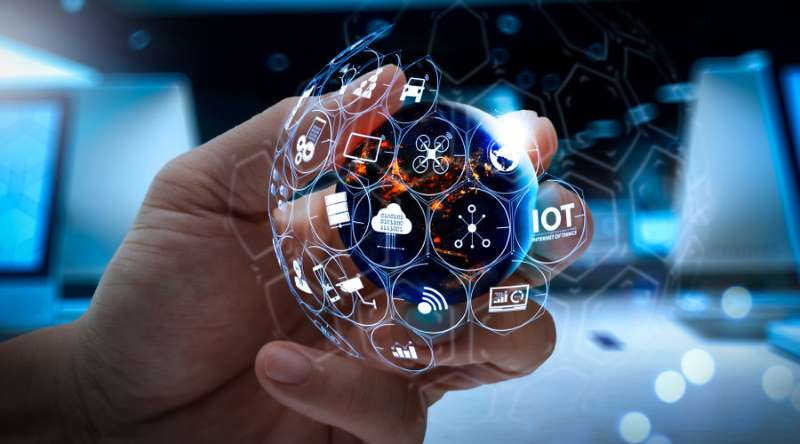
The Internet of Things (IoT): Linking Global Communities
The Internet of Things, or IoT, is a rapidly expanding network of networked systems, sensors, and gadgets that gather and share data to facilitate automated processes and smooth communication. Through the provision of real-time data insights, predictive maintenance, resource optimisation, and operational efficiency enhancement, this technology is revolutionising several sectors.
Constructing Sustainable and Networked Urban Environments with Smart Cities
IoT technology are being used by smart cities to build more sustainable, efficient, and livable urban settings. Cities may maximise resources, lessen their negative effects on the environment, and enhance the quality of life for their citizens by combining linked systems for public safety, waste management, energy management, and transportation. Intelligent traffic control, intelligent lighting, and real-time noise and air quality monitoring are examples of IoT-enabled smart city technologies.
Predictive Maintenance and Operational Optimisation with Industrial IoT (IIoT)
Real-time monitoring, predictive maintenance, and process optimisation are made possible by the Industrial Internet of Things (IIoT), which is completely changing manufacturing and industrial processes. Connected sensors and devices gather information about manufacturing processes, environmental factors, and equipment performance. This information enables preventive maintenance, lowers downtime, and boosts overall efficiency. Several sectors, including manufacturing, energy, and transportation, are using IIoT solutions.
Smart Building and Home Automation: Increasing Comfort and Productivity
Because IoT technologies enable smart home and building automation systems, they are revolutionising both our personal and professional lives. A building's or home's lighting, temperature, security, and energy use are just a few of the things that connected devices and sensors can monitor and manage. These systems are a desirable option for both residential and commercial settings as they not only improve comfort and convenience but also help save money and reduce energy use.
Safeguarding the Digital Frontier with Cybersecurity
Cybersecurity has become a major worry as new technologies continue to infiltrate every part of our life. Important issues that need to be resolved include securing sensitive data, defending digital assets, and making sure vital infrastructure is resilient to cyberattacks.
Protecting Machine Learning and AI Systems
With the increasing use of AI and machine learning technology, new cybersecurity risks have emerged. The integrity and dependability of these systems are seriously threatened by adversarial assaults, data poisoning, and model weaknesses. To protect AI and ML models from malevolent actors, researchers and security experts are creating resilient strategies like adversarial training, secure enclaves, and privacy-preserving machine learning.
Blockchain-Powered Security Remedies
Blockchain technology presents viable ways to improve cybersecurity. It is a good fit for applications like access control, identity management, and secure data storage because of its decentralised and unchangeable nature. Blockchain-based technologies are appealing to companies handling sensitive data and vital infrastructure because they may provide improved traceability, transparency, and resistance against cyberattacks.
Post-Quantum Cybersecurity and Quantum Cryptography
Given that many of the encryption algorithms now in use might be broken by quantum computers, the development of quantum computing presents serious challenges to established cryptography techniques. The goal of the developing disciplines of post-quantum and quantum cryptography is to provide data protection and secure communication systems that can withstand assaults from quantum computers. These technologies are essential for maintaining the long-term security of digital systems and protecting sensitive data.
Bioengineering and Biotechnology: Transforming the Life Sciences
Biotechnology and bioengineering are seeing revolutionary breakthroughs due to the combination of biology, engineering, and new technologies. These technologies, which range from biomanufacturing and synthetic biology to personalised medicine and gene editing, are revolutionising our knowledge of life and providing creative answers to pressing global issues.
Personalised therapies and precision medicine
Utilising genetic information, sophisticated diagnostic techniques, and customised treatment plans, precision medicine customises medical care for each patient. Healthcare experts may improve treatment results and minimise side effects by developing tailored medicines and interventions based on an individual's genetic composition, medical history, and environmental circumstances. This strategy has a great deal of promise for treating chronic illnesses, uncommon genetic diseases, and complicated diseases like cancer.
Technologies for Gene Editing and CRISPR
Genetic engineering is undergoing a revolution thanks to CRISPR (Clustered Regularly Interspaced Short Palindromic Repeats) and other gene editing technologies. With the use of these potent instruments, scientists may accurately alter and change genetic sequences, creating new therapeutic options for hereditary illnesses, cultivating crops resistant to disease, and improving biomanufacturing techniques. To guarantee the safe and moral use of new technologies, ethical concerns and responsible governance are essential.
Artificial Biology and Bioprocessing
Synthetic biology is the design and construction of biological systems with intended functionalities using ideas from computer science, biology, and engineering. Biomanufacturing applications, including the production of medicines, biofuels, and other useful biomaterials, have enormous promise in this discipline. Synthetic biology provides effective and sustainable alternatives to conventional industrial techniques by genetically modifying microbes or cell cultures to manufacture certain substances or carry out specified functions.
Sustainable Technologies: Resolving Issues with the Environment
As the globe struggles with urgent environmental problems including resource depletion, climate change, and environmental degradation, new technologies are essential to creating long-term solutions and advancing a more sustainable future.
Technologies for Renewable Energy
Technologies for renewable energy, including geothermal, solar, wind, and bioenergy, are quickly becoming more and more popular as practical replacements for fossil fuels. The efficiency and dependability of energy storage, smart grids, and energy management systems are being progressively improved. Furthermore, potential avenues towards a future with clean energy include cutting-edge nuclear reactors and hydrogen fuel cells.
Circular economy and sustainable materials
Reducing waste, using resources less, and lessening environmental effects all depend on the creation of sustainable materials and the shift to a circular economy. New technologies are making it easier to recover and reuse resources and to create more sustainable goods. Examples of these technologies include bio-based materials, sophisticated recycling procedures, and additive manufacturing (3D printing).
Technologies for Environmental Monitoring and Remediation
The involvement of emerging technologies is crucial in the monitoring and mitigation of environmental problems. Unmanned aerial vehicles (UAVs) and satellite imaging are two examples of remote sensing technologies that allow for precise and extensive monitoring of environmental conditions, such as deforestation, land degradation, and pollution of the air and water. Furthermore, cutting-edge remediation methods like phytoremediation and bioremediation provide creative answers for clearing polluted areas and reestablishing ecosystems.
Technology in Education and Learning: Revolutionising Knowledge Acquisition
The way that information is learned, communicated, and applied is being revolutionised by the incorporation of developing technology into education and learning settings. These technologies are changing the face of education, encouraging participation, and supporting lifelong learning. They range from personalised learning experiences to immersive learning environments.
Customised Education and Flexible Education
Using AI and machine learning, adaptive learning systems customise educational materials and learning experiences to meet the requirements, skills, and learning preferences of each individual student. These systems ensure that every learner has a customised and successful educational experience by dynamically adjusting teaching techniques, material distribution, and assessment strategies based on the analysis of student data and performance.
Extension of Reality in Immersive Learning Environments
The manner that students interact with educational information is changing as a result of the advent of Extended Reality (XR) technologies, such as Virtual Reality (VR), Augmented Reality (AR), and Mixed Reality (MR). Through interactive and hands-on learning opportunities, immersive learning environments made possible by modern technologies provide students the chance to investigate difficult ideas, play out real-world situations, and hone their practical skills in a secure setting.
Platforms for Remote and Online Learning
The emergence of online and remote learning platforms has transformed the accessibility of education, allowing students from many regions and backgrounds to gain information and skills. These platforms use digital technology to provide flexible and self-paced education options via remote learning, including interactive multimedia, video conferencing, and collaboration tools.
Responsible Innovation and Ethical Aspects
Addressing ethical issues and encouraging responsible innovation are critical as new technologies continue to change our environment. To reduce possible hazards, defend human rights, and promote acceptance and trust in society, it is imperative that new technologies be developed, used, and governed ethically.
Algorithmic Bias and Ethical AI
Transparency, privacy, and algorithmic bias are among the issues that have been brought up by the broad use of AI and machine learning systems. In order to guarantee that these technologies are created and used in a fair, responsible, and transparent way, fostering inclusion and reducing the possibility of biases and discriminatory effects, ethical AI frameworks and principles are being established.
Data security and privacy
Data security and privacy issues have increased with the rise of data-driven technologies like AI, big data analytics, and the Internet of Things. Protecting individual privacy rights and ensuring the responsible treatment of personal data requires strong data governance frameworks, privacy-enhancing technology, and legal measures.
Conscientious Innovation and Its Effect on Society
Emerging technologies have the power to completely alter society, therefore it's critical to foresee and prepare for any possible negative effects in advance. Frameworks for responsible innovation promote ethical discussion, stakeholder participation, and taking society values into account all throughout the research and development phase. We can make sure that new technologies are created and implemented in a way that supports fairness, satisfies societal requirements, and minimises any possible negative effects by encouraging inclusive and participatory methods.
Encouraging Multidisciplinary Cooperation and Information Exchange
The fast progression of technology demands multidisciplinary cooperation and information exchange across many domains and industries. Experts from a range of fields, including the social sciences, humanities, engineering, and science, may be brought together to promote a comprehensive knowledge of developing technologies and their ramifications. The interchange of ideas, knowledge, and best practices is facilitated by interdisciplinary research centres, academic-industry alliances, and collaborative platforms. This leads to innovation and responsible development.
Addressing complex global concerns that call for diverse solutions also heavily relies on interdisciplinary cooperation. By combining knowledge from many fields, we can create all-encompassing plans and take use of new technology to address problems like sustainable development, food security, healthcare accessibility, and climate change.
Fostering a Culture of Continuous Education and Expertise Improvement
The fast evolution of technology necessitates a culture that values lifetime learning and ongoing skill improvement. Emerging technologies are upending established sectors and creating new employment possibilities, so people need to be prepared with the skills and flexibility needed to survive in this changing environment. In order to maintain workforce competitiveness and readiness for occupations of the future, governments, organisations, and educational institutions must place a high priority on professional development opportunities, reskilling efforts, and lifelong learning initiatives.
Furthermore, developing a growth mindset and stimulating creativity and curiosity are crucial for raising the next wave of inventors and problem solvers. We can fully use new technology and promote sustainable advancement by adopting a culture of ongoing learning and skill development.
Closing Thoughts: Looking Forward with Hope and Accountability
Emerging technologies are a dynamic, constantly changing field with many prospects for advancement, innovation, and social change. Striking a balance between embracing the promise of new technologies and addressing the ethical, social, and environmental issues that accompany their development and deployment is crucial as we traverse this fascinating frontier.
Through the promotion of ethical innovation methods, multidisciplinary cooperation, and lifelong learning, we may effectively use the potential of new technologies to build a more promising future for all. We can fully use these revolutionary technologies and create a more wealthy, just, and resilient society if we have hope, ethical responsibility, and a dedication to sustainable growth.




0 Comments